
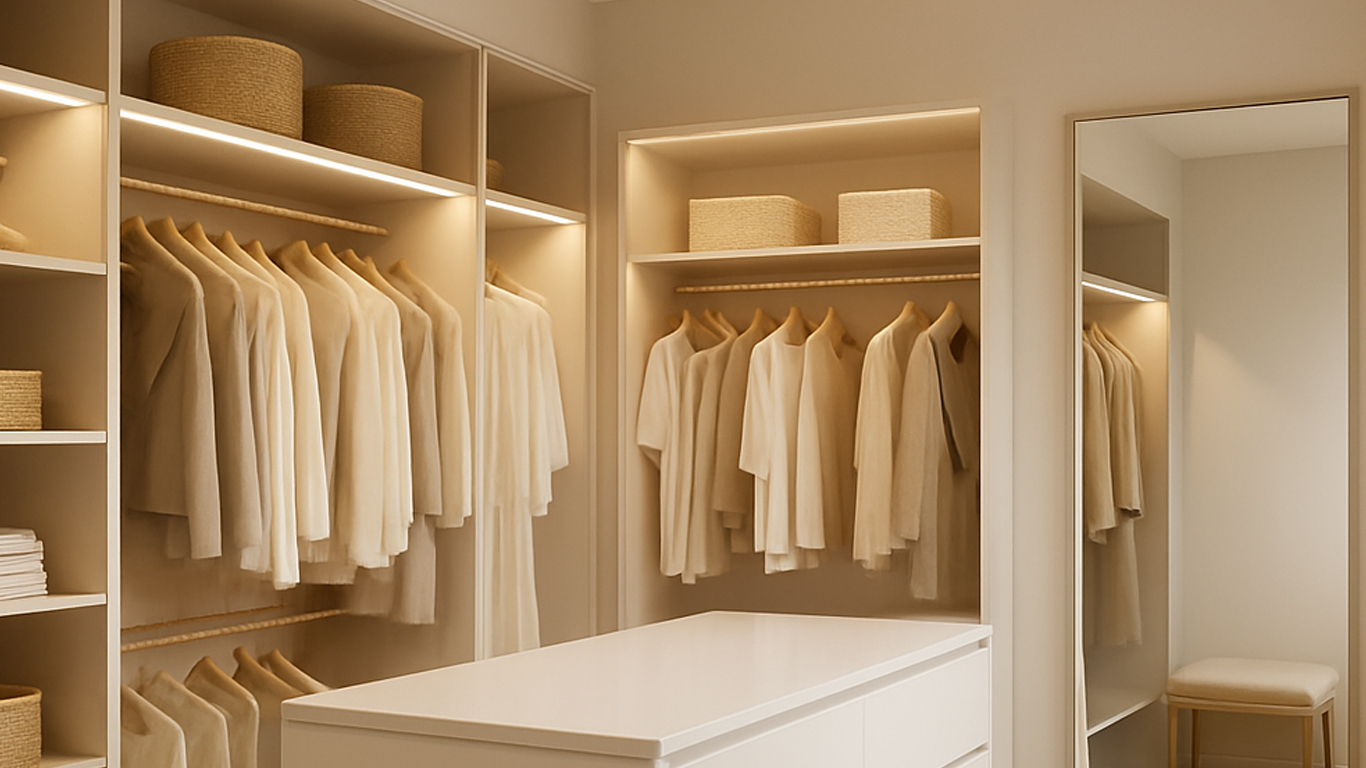
A walk-in closet is a luxury—but a functional one requires thoughtful planning. Start by defining clear zones for hanging, shelving, accessories, and shoes. Do ensure you measure clothing lengths before deciding rod heights—long dresses, shirts, and coats all require different dimensions. Using soft-close drawers, felt-lined compartments, and adjustable shelves maintains longevity and allows future flexibility.
Lighting is one of the most important "do’s". Bright, shadow-free lighting—especially with warm white tones—enhances visibility and gives the closet a boutique feel. Mirrors placed thoughtfully amplify the sense of space, while good ventilation prevents the buildup of moisture and odour.
On the "don’ts" side, avoid overfilling the closet with too many open shelves; they can make the space look messy unless maintained meticulously. Don’t choose materials that warp easily—closets require stable substrates like HDHMR or BWP plywood, especially in humid locations. Avoid deep shelves where items get lost at the back. Similarly, don’t neglect ergonomic spacing; wardrobes that are too high or too deep become inconvenient and underutilised.
A great walk-in closet feels structured yet luxurious. When designed well, it elevates everyday living and gives the homeowner a sense of calm, organisation, and indulgence